About this spot
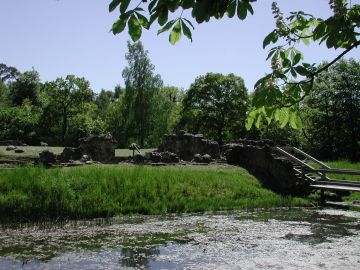
The first time the place appears in written sources, it is under names such as: ”Aswarboth.” It comes from the boy’s name Aswarth. It was his ”bod.” This means small house, hut, lean-to. Around 1163, Bishop Absalon donates ”Aswarboth” to some monks of the Carthusian order. It was a strict and ascetic monastic order who were vegetarians, they were not allowed to speak, and they had no music or singing at their services. Despite this, the place, and the Danish weather, were too harsh for them, and after six years they returned to the southern climes of France. Thereafter, the monastery was in the possession of Esrum monastery for a few years, after which Sorø monastery held Asserbo for the next couple of hundred years. In the early 1400s, Peter Oxes came into possession of the castle. He transformed Asserbo into a manor house. A moat was built, with a drawbridge over it and a gate. As well as a paved courtyard and deep cellars. Later, Lord High Steward Poul Laxmand takes over Asserbo. In 1560, King Frederik II acquired the Laxman estate by exchange. In the following years
Facilities
Reviews
No reviews yet — been here? Reviews are coming to CampCompass soon.